
Hidden Doors
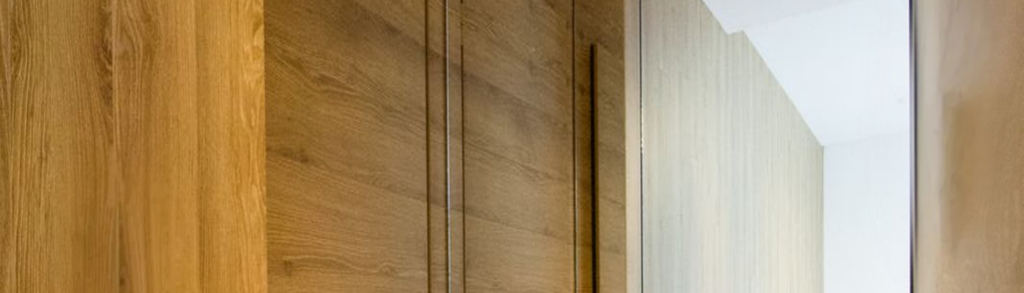
A hidden door does not hide a room — it hides the door. The leaf sits perfectly flush in an aluminium frame with no visible casing, no architrave and no exposed hinges, so the wall reads as one uninterrupted surface and the doorway only announces itself when you push it open.

How a door disappears into a wall
Three things have to be right, and all three are where cheap concealed doors fail. The frame must be recessed into the wall plane rather than sitting proud of it. The hinges must be fully concealed and adjustable in three axes, because a flush door shows every millimetre of misalignment. And the leaf must stay dead flat for years — a hidden door that bows is instantly obvious, since there is no casing to hide the gap behind.
Our patented aluminium-and-wood system handles all three. Aluminium holds the geometry of the frame and the perimeter of the leaf; the wood core gives the face something to accept paint, paper, veneer or plaster effect. Zero deformation is what makes “invisible” a durable result rather than a photoshoot trick.
Finish it any way you want
The whole point is that the door takes the wall’s identity. We supply the leaf ready for your finisher, or we apply it ourselves:
- Painted to a colour you supply, matched by hand
- Wallpapered — the classic “wallpaper door”, where the pattern runs straight across the closed door
- Veneered or lacquered to match adjacent panelling
- Clad in stone, micro-cement or fabric for feature walls
Because the leaf is dimensionally stable, adhesives and finishes hold. On a warped door, wallpaper telegraphs every ripple; on ours it lies flat.
What exactly is a hidden door?
A hidden door is a fully flush door in a concealed aluminium frame, with no visible casing, architrave or hinges. Finished in the same paint, wallpaper or cladding as the surrounding wall, it reads as part of the wall and only announces itself when opened.
Can a hidden door be wallpapered?
Yes — that is the classic “wallpaper door”. The leaf is supplied ready for your finisher, or we apply the wallpaper ourselves, with the pattern running continuously across the closed door and the wall.
What wall build-up does a hidden door need?
The frame is recessed into the wall plane, so it fits a standard stud or solid wall build-up as long as the frame depth is known at first-fix stage. Send us your wall construction and opening dimensions and we will confirm the right frame depth before you start.
Are hidden doors made to measure?
Every leaf and frame is manufactured to your exact opening dimensions, including full-height and oversized leaves. Nothing is pulled from stock sizes.
How is the door kept perfectly flush?
We use concealed hinges with full three-dimensional adjustment, so the installer can dial the reveals to a consistent 2–3 mm on site after the wall is finished. That final adjustment is what makes the closed door sit dead flat in the wall plane.
Concealed hinges, adjusted on site
We use concealed hinges with full three-dimensional adjustment, so the installer can dial the reveals to a consistent 2–3 mm after the wall is finished. That adjustment is what separates a door that reads as part of the wall from one that reads as a door with the trim removed. Soft-close and integrated magnetic latch options are available for a completely flush handle face.
Where hidden doors work best
- Living rooms and studies — a clean wall with no visible opening line
- Dressing rooms and walk-in wardrobes — the door disappears into the joinery
- Hallway utility cupboards — hiding storage without building a false wall
- Whole feature walls — run several leaves in a row for a fully concealed passage
Specification at a glance
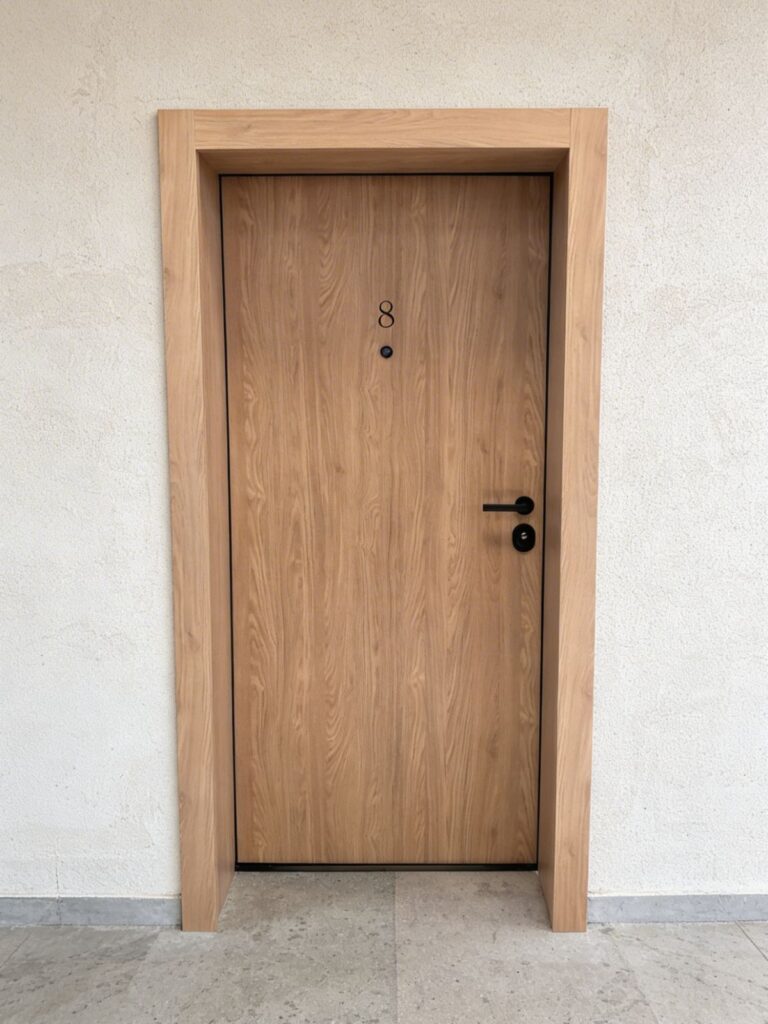
- Fully flush aluminium frame recessed into the wall
- Concealed, three-way adjustable hinges
- Leaf ready for paint, wallpaper, veneer or cladding
- Made to measure, including full-height leaves
- Soft-close and concealed latch options